








Last updated: June 2026 · Written by Sahina Ibrahim, Co-Founder, NUHR Home — Sahina has developed and curated every fragrance in the NUHR range since the brand's founding in 2016. She leads all in-house formulation at NUHR's Blackburn studio.
If you have just discovered oud and are not sure where to start, this page is your map. Oud is a broad subject and the terminology — bakhoor, agarwood, incense cones, direct burning — can feel overwhelming at first. This guide explains the basics in plain terms and points you toward the right reading depending on your specific situation.
What Is Oud, in Plain Terms?
Oud is a fragrance material derived from agarwood — a dense, resinous wood that forms inside Aquilaria trees when they become infected by a particular mould. The resin-saturated wood has a distinctive, complex smell: woody, warm, slightly animalic, with a smoky depth that lingers long after a burning session ends.
If you want the complete picture on what oud is, where it comes from and how it is used: What Is Oud? The Complete Guide to Agarwood Fragrance →
The Three Things You Need to Understand First
1. Oud is a material, not a format
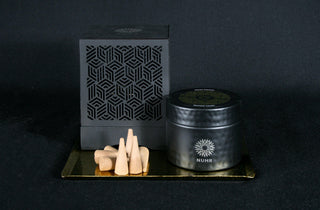
Oud (agarwood) is the raw ingredient. It can be used in several different formats — as incense cones that burn directly, as bakhoor chips heated on an electric or charcoal burner, or as concentrated oil applied to skin or fabric. Each format has a different character, intensity and practical application.
2. Bakhoor and incense cones are different things
Bakhoor is a prepared blend — typically wood chips, resins and oils — that is heated (not burned directly) on a burner. Incense cones are self-combusting: you light them, they burn on their own. Full explanation: Bakhoor, Oud and Incense: What's the Difference? →
3. Oud smells unfamiliar at first — that is normal
Oud has a distinctive animalic, woody depth that sits outside the usual reference points of most Western fragrance. Many people find it unusual on first encounter, and then find it deeply appealing after a few sessions. This is a familiarity effect. More on this: Why Oud Smells Different to Other Fragrances →

Choose Your Starting Point
Quick Glossary
Incense cones: A self-combusting format — the cone burns on its own once lit.
Bakhoor: A prepared blend of wood chips, resins and fragrance oils heated on an electric or charcoal burner. Generally more intense than cones.
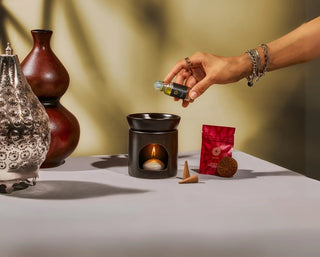
Electric burner: A device that heats bakhoor chips to a controlled temperature without combustion.
Mabkhara: A traditional incense burner using charcoal discs to heat bakhoor. Produces a more intense, traditional result.
All NUHR Oud Guides
Where to Start with NUHR


- Oud is a fragrance material (agarwood) available in several formats — incense cones, bakhoor chips, oud oil — each with different character and practical requirements.
- Bakhoor (heated chips) and incense cones (self-combusting) are different things, produce different results, and require different equipment.
- For UK homes, incense cones are generally the simplest entry point: no equipment needed, predictable session length, approachable at accessible prices.
- Start with lighter, blended profiles (rose-oud, amber-oud) before moving to pure traditional oud for the most comfortable introduction.
Recommended Next Reading
→ If you want to understand oud before buying anything: What Is Oud? The Complete Guide →
→ If you have cones and want to use them now: How to Use Oud Incense Cones →
→ If you want to pick the right scent: Best Oud Scents for Beginners →
→ If something smells unfamiliar and you're not sure what to think: Why Oud Smells Different →