








Last updated: June 2026 · Written by Sahina Ibrahim, Co-Founder, NUHR Home — Sahina has developed and curated every fragrance in the NUHR range since the brand's founding in 2016. She leads all in-house formulation at NUHR's Blackburn studio.
Direct burning means the oud material itself is ignited and combusts — as with oud incense cones or sticks, which burn themselves once lit. Indirect burning means an external heat source is applied to the oud material, causing it to smoulder and release fragrance without catching fire — as with bakhoor chips on an electric burner or charcoal. The practical difference: direct burning tends to be more accessible and consistent; indirect burning produces a different, often more layered aromatic character and allows more control over the session.
Why This Distinction Matters
Most people who are new to oud fragrance do not think about how the material is being burned — they simply light a cone or place bakhoor on a burner and experience the result. But understanding the difference between direct and indirect burning explains why the same underlying oud material can smell noticeably different depending on how it is used, and why certain formats are better suited to certain purposes.
The oud material is ignited directly — the material itself combusts and burns to completion. Heat comes from within the material.
Examples: Oud incense cones, incense sticks, raw oud wood chips lit directly.
Equipment: No external heat source required — only a heat-safe holder.
An external heat source is applied to the oud material, which smoulders and releases fragrance. The material is heated rather than intentionally ignited.
Examples: Bakhoor chips on an electric burner plate; bakhoor on charcoal (mabkhara).
Equipment: Electric burner or charcoal setup required.
How Direct Burning Works
In direct burning, the oud material — a cone, stick or raw wood chip — is lit with a flame until it begins to glow, then the flame is extinguished, leaving the glowing ember to burn steadily through the material. Once lit, the material sustains its own combustion and burns to completion. The fragrance is released through this combustion process, with consistent and predictable output throughout the session.
How Indirect Burning Works
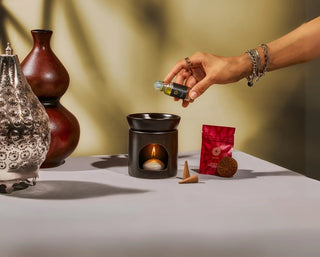
In indirect burning, the oud material is placed on or near a heat source — an electric plate or a hot charcoal disc — and the applied heat causes the material to smoulder and release aromatic compounds as vapour and smoke. This method allows much more control over the session. On an electric burner, you can adjust the heat level to affect fragrance intensity. You can add more material partway through, or remove chips if the intensity becomes too high.

How the Fragrance Character Differs
| Aspect | Direct Burning (cones) | Indirect Burning (bakhoor) |
|---|---|---|
| Aromatic consistency | Very consistent throughout the session | Evolves as heat changes — often more layered |
| Intensity | Moderate and controlled | Higher, particularly with charcoal |
| Smoke character | Lighter — material burning cleanly | Denser — material smouldering heavily |
| User control | Low — cone burns at its own rate | High — heat can be adjusted or material added/removed |
| Setup required | None beyond a holder | Electric burner or charcoal |
| Best for | Daily use, beginners, consistent results | Occasions, experienced users, maximum impact |
Which Should You Choose?
- You want a simple, no-equipment experience
- You are new to oud fragrance
- You want consistent output every time
- You prefer moderate, manageable intensity
- You want oud as part of a daily home routine
- You want more control over fragrance intensity
- You want a more complex, evolving session
- You are comfortable with a burner setup
- You are hosting guests or marking an occasion
- You want maximum fabric infusion and room presence
Frequently Asked Questions
Is indirect burning better for high-quality oud?
Many experienced oud users prefer indirect burning for high-quality raw agarwood or premium bakhoor blends, on the basis that controlled lower heat allows more of the material's aromatic complexity to emerge gradually. This is an observation shared widely among enthusiasts rather than a tested principle, and perception varies considerably between individuals.
Does indirect burning produce less smoke than direct burning?
Not necessarily — in practice, bakhoor via indirect burning (particularly on charcoal) often produces more visible smoke than oud incense cones. Charcoal bakhoor in particular generates quite dense, heavy smoke. Electric indirect burning tends to produce moderate, controlled smoke similar to cones.
Is one method safer than the other?
Direct burning (incense cones) involves a self-contained, small combustion source — essentially equivalent to burning a candle. Indirect burning on charcoal involves an open charcoal heat source that reaches higher temperatures and takes longer to cool. Electric indirect burning removes the charcoal risk and is broadly comparable in safety to direct-burning cones.
Why does my bakhoor smell different on electric vs charcoal?
The temperature difference between electric and charcoal burning is the most likely explanation. Charcoal typically reaches higher temperatures than an electric plate, which can cause some aromatic compounds to burn off more quickly and adds a slight mineral note from the charcoal itself. Many users find charcoal burning produces a more intense, slightly smokier result; electric burning often delivers a cleaner expression of the bakhoor's own fragrance profile.
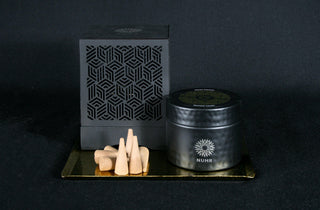
NUHR Oud Incense Cones


- Direct burning: the material ignites and burns itself — as with oud incense cones. No external heat source needed, consistent output, lower intensity.
- Indirect burning: external heat is applied to the material without igniting it — as with bakhoor on an electric plate or charcoal. More control, typically higher intensity.
- Direct burning is the lower-friction option for beginners and daily use; indirect burning suits experienced users who want more control over the session.
- Many regular oud users use both methods — direct-burning cones for daily use, indirect bakhoor for occasions when greater intensity or more control is wanted.
Recommended Next Reading
→ Electric Bakhoor Burner vs Charcoal Burner: Which Should You Choose?
→ How to Use Bakhoor at Home: The Complete Guide
→ How Long Does Oud Last? Fragrance Longevity Explained
→ New to Oud? Start Here