








Last updated: June 2026 · Written by Sahina Ibrahim, Co-Founder, NUHR Home — Sahina has developed and curated every fragrance in the NUHR range since the brand's founding in 2016. She leads all in-house formulation at NUHR's Blackburn studio.
Oud smells different because it is fundamentally different from most fragrance materials in common use. It is a living material — a resin produced inside a tree in response to infection — and its aromatic profile reflects that origin: woody, resinous, deep, with a natural animalic character that has no direct equivalent in synthetic or plant-based fragrances. Unlike most perfumes, which are built around a single defined note or a clean, linear profile, oud is multi-dimensional — it layers multiple distinct character notes simultaneously and changes as it warms, as the session progresses, and as it settles into a room.
A Fragrance Unlike Others
Most fragrances that people in the UK encounter daily are built on clean, linear profiles: the fresh lift of a citrus cologne, the defined sweetness of a floral perfume, the clean warmth of a vanilla candle. These are designed to be immediately legible — you recognise what they are within a few seconds.
Oud does not work this way. The first encounter often produces a response more like meeting a complex person than identifying a familiar smell — there is depth, warmth and presence, but it does not resolve into a single recognisable note. It takes time to understand, and reveals different aspects of itself as the session progresses.
Where Oud's Distinctive Character Comes From
Oud forms inside Aquilaria trees when they become infected with a specific mould. The tree produces a dense, dark resin in response — and it is this resin-saturated heartwood that is harvested as agarwood. The aromatic profile of the resulting material depends on the tree species, the region, the severity and age of the infection, and how the wood is processed and aged.
Oud is a natural, biologically complex material — not a designed fragrance. This is why it varies so considerably between sources, and why experienced oud users develop an appreciation for regional character and provenance unusual for any other home fragrance material.
The Multi-Dimensional Profile
The deep, dark wood character is the most fundamental aspect — rich, warm, substantial. Different from clean sandalwood or cedar; much denser and more saturated.
A thick, slightly sweet, sticky quality that comes from the resin itself. Similar to amber or myrrh in character but more complex and less sweet.
A slight, naturally occurring animal-like quality — present in genuine oud, absent in synthetic accords. Not unpleasant; more like leather or earth.
A warm, slightly sweet quality that emerges as oud burns, alongside the smoky character of the combustion. The balance between these shifts as the session progresses.
Why It Surprises Western Noses
For most people in the UK, the animalic note in genuine oud is the element that produces the most surprised reactions. Western fragrance traditions have largely moved away from animalic notes over the past century. As a result, Western noses are simply less accustomed to encountering this quality in a fragrance context.
Many people who are initially surprised by oud find that familiarity changes their response considerably. After a few sessions, the animalic quality tends to register as depth and richness rather than something unfamiliar.

How Oud Changes During a Burn Session
In the first few minutes after lighting, the more volatile compounds come forward first. There can be a slight sharpness or smokiness at this stage that settles as the session warms. In the middle of the burn, the fuller body of the fragrance typically emerges: the warm, woody, resinous heart. As the session nears its end, the heaviest, deepest compounds linger longest.
This is why it is worth staying with an oud session rather than forming an impression from the first five minutes. Many people who have concluded that oud "is not for them" have done so on the basis of the initial phase of a burn, before the fragrance has had the opportunity to develop.
Frequently Asked Questions
Why does oud smell like leather or earth sometimes?
This is the naturally occurring animalic character of genuine agarwood resin. Different agarwood sources and qualities produce this character to varying degrees: some oud has a very prominent animalic depth; others lean more toward the woody and resinous aspects. Many fragrance lovers come to appreciate this quality as part of what makes oud distinctive.
Does oud smell different to different people?
Fragrance perception is inherently individual, and oud is no exception. The animalic note in particular seems to register very differently between individuals: some find it immediately appealing, others find it surprising at first but grow to appreciate it. Floral oud blends — which soften the animalic aspect with complementary notes — tend to have a broader accessible range across different preferences.
Is oud supposed to smell smoky?
The smoke note in oud comes from the combustion of the incense material — it is a feature of burning any incense, not specific to oud. The smoky character tends to be most prominent in the first few minutes of a session and settles as the session progresses. If you find smoke character too prominent, try burning less material at one time or using an electric burner rather than charcoal.
I tried oud once and did not like it — should I try again?
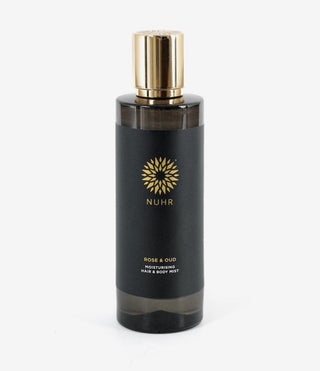
It is worth trying again if you are curious. Starting with a bridging profile like Rose & Oud, using a small amount, in a comfortable and relaxed setting, gives oud a fair trial. Many people who have written off oud on first encounter find a very different response when they approach it in a different context with lower expectations.
Explore the NUHR Range


- Oud smells different because it is a genuinely complex natural material — a resin produced inside a tree — rather than a designed or synthetic fragrance.
- Its aromatic profile combines woody, resinous, animalic and sweet-smoky character simultaneously — unlike most fragrances, which are built around a single defined note.
- The animalic note is inherent to genuine oud and is what most surprises Western noses encountering it for the first time — it tends to become an appreciated aspect of the material with familiarity.
- Oud evolves during a burn session — the first few minutes are not representative of the full experience. Give a session time to develop before forming an opinion.
- Starting with a bridging profile (such as rose and oud) lowers the entry barrier without sacrificing the genuine oud character that makes the material distinctive.
Recommended Next Reading
→ What Makes High-Quality Oud Different?
→ Best Oud Scents for Beginners: Where to Start
→ What Is Oud? The Complete Guide to Agarwood Fragrance
→ New to Oud? Start Here