







Home Fragrance Guide
Halal & Alcohol-Free Home Fragrance: A Complete Guide
By the NUHR Home Team · 10 min read

Last updated: June 2026 · Written by Sahina Ibrahim, Co-Founder, NUHR Home — Sahina has developed and curated every fragrance in the NUHR range since the brand's founding in 2016. She leads all in-house formulation at NUHR's Blackburn studio.
Halal home fragrance refers to products free from alcohol (ethanol), animal-derived ingredients not sourced permissibly, and other prohibited substances. Oud incense cones, bakhoor, and alcohol-free reed diffusers are all inherently halal-friendly formats. The key is checking ingredients, not just format — carrier liquids and synthetic compounds vary by brand.
What Makes Home Fragrance Halal?
The halal status of a home fragrance product depends primarily on its ingredients. For most Muslim consumers, the central concern is the presence of alcohol (specifically ethyl alcohol or ethanol), which is used as a carrier solvent in many commercial perfumes, room sprays, and diffuser liquids. Additional considerations include animal-derived ingredients such as musk (historically from the musk deer), civet, or ambergris, and any synthetic compounds derived from prohibited sources.
Home fragrance is a somewhat different category to wearable perfume. Many Muslims prefer to avoid alcohol entirely — both for personal observance and for use in the home during prayer times. Incense products (oud cones, bakhoor) and alcohol-free reed diffusers remove this question entirely.
Free from ethyl alcohol, ingredients derived from non-permissibly slaughtered animals, and other prohibited substances. Can include natural plant oils, water-based carriers, resins, and synthetic compounds with no prohibited source material.
Does not use ethyl alcohol (ethanol) as a carrier or preservative. May use alternative solvents such as dipropylene glycol (DPG) or water-based emulsions. Alcohol-free does not automatically mean halal — other ingredients still require checking.
Common Ingredients to Check
Which Home Fragrance Formats Are Naturally Halal-Friendly?
| Format | Typical Carrier | Alcohol-Free by Default? | Notes |
|---|---|---|---|
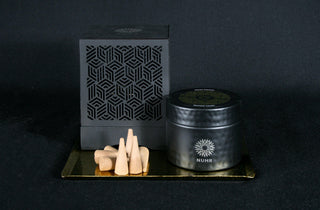
| Oud Incense Cones | Wood / resin base | ✓ Yes | No liquid carrier; fragrance released through combustion. Check for animal-derived binding agents. |
| Bakhoor (wood chips) | Agarwood / resin | ✓ Yes | Traditional format; inherently alcohol-free. Verify fragrance oil used to dress the chips. |
| Reed Diffuser | DPG or ethanol | Brand dependent | Many commercial diffusers use ethanol. Alcohol-free versions use DPG or similar. Always check. |
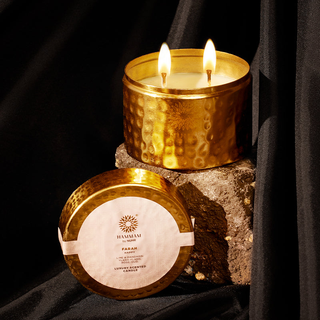
| Scented Candle | Wax (soy/paraffin) | ✓ Yes | Wax base is alcohol-free. Verify fragrance oils used in the blend. |
| Room Spray | Ethanol + water | ✗ Rarely | Most commercial room sprays use high concentrations of ethanol. Dedicated halal versions exist but are uncommon. |
| Oil-Based Perfume (Attar) | Carrier oil | ✓ Yes | Traditional Islamic perfumery format; alcohol-free by design. |
The Islamic Tradition of Oud and Incense
The connection between Islam and oud fragrance is centuries old and deeply documented. The Prophet Muhammad ﷺ spoke of oud in hadith, describing it as "the best of the things which you can use for fumigation." This narration is recorded in both Sahih Muslim and Sahih al-Bukhari and has influenced the widespread use of oud incense in Muslim households, mosques, and community gatherings across the world.
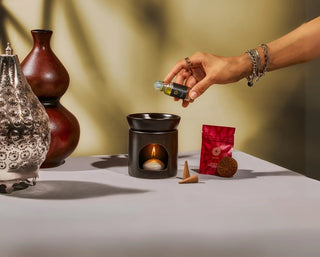
Bakhoor — oud-soaked wood chips burned on charcoal — has been used across the Arabian Peninsula, South Asia, and Southeast Asia as both a fragrance practice and a form of welcome and hospitality. Today it is practised from Blackburn to Beirut, from Kuala Lumpur to Karachi.

How to Verify a Product is Halal
There is no universal halal certification body for home fragrance in the UK, and standards vary internationally. Look for explicit statements: "alcohol-free," "no ethanol," "DPG carrier," "vegan," or "no animal-derived ingredients." A vegan certification combined with an alcohol-free statement addresses the two most common halal concerns in home fragrance.
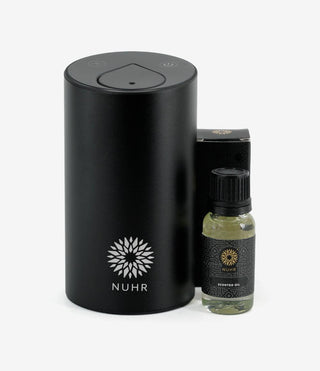
NUHR Home: All NUHR Home products are halal, vegan, and entirely free from alcohol. The oud incense cones use an oil-based fragrance system with no ethanol carrier. No animal-derived ingredients are used in any NUHR fragrance. All products are manufactured in Blackburn, England.
Alcohol-Free Reed Diffusers: What to Know
Most mainstream commercial reed diffusers use ethanol as the primary carrier liquid. Alcohol-free alternatives using dipropylene glycol (DPG) perform comparably in most home conditions and are completely free of ethanol. DPG-based diffusers are the straightforward choice for Muslim households — no compromise on fragrance, no concern about alcohol presence in the home.
NUHR Home: Halal, Vegan, Alcohol-Free
Every NUHR Home product is formulated to be halal and vegan. No alcohol is used in any product. No animal-derived ingredients are used in any fragrance. All fragrances are developed in-house by the NUHR team in Blackburn — a team that understands the fragrance traditions and values of their customer base because they share them.


Frequently Asked Questions
Is home fragrance halal if it contains alcohol?
This is a matter of scholarly interpretation. Many Muslim households prefer alcohol-free products as a precaution, particularly given that home fragrances are used in spaces where prayer takes place. Incense cones, bakhoor, and DPG-based diffusers provide a straightforward alcohol-free alternative.
Are incense cones halal?
Oud incense cones are inherently alcohol-free — their fragrance is released through combustion, not via a liquid carrier. NUHR Home incense cones are halal and vegan, using oil-based fragrance compounds and no animal-derived ingredients.
Can I burn incense during prayer?
Burning incense before prayer to purify and scent the space is a well-established Islamic tradition. Light the cone 20–30 minutes before prayer, allow it to finish burning, and benefit from the residual fragrance during the prayer.
What is the difference between halal and vegan fragrance?
Vegan certification confirms that no animal-derived ingredients were used. Halal additionally addresses alcohol content. A product that is both alcohol-free and vegan addresses the most common halal concerns for home fragrance.
Are synthetic musks halal?
Yes. Synthetic musks are produced without any animal source material and are universally considered halal. Natural musk from the musk deer's gland is not halal. The fragrance industry has largely moved to synthetic alternatives.
Is reed diffuser liquid halal?
It depends on the carrier liquid. Many commercial reed diffusers use ethanol. Alcohol-free diffusers use DPG or similar solvents. Always check the product description. NUHR Home reed diffusers are alcohol-free.
Does oud have Islamic significance?
Yes. Oud (agarwood) is referenced in hadith as among the best substances for fumigation. It has been used in Islamic domestic, spiritual, and ceremonial contexts for over a thousand years, practised across Muslim communities globally.
Can I use NUHR Home products during Ramadan?
Yes. All NUHR Home products are halal and alcohol-free. Many Muslim households find that burning oud incense cones or using a reed diffuser enhances the atmosphere during Ramadan — particularly in the evenings after Iftar and before Tarawih.