








Last updated: June 2026 · Written by Sahina Ibrahim, Co-Founder, NUHR Home — Sahina has developed and curated every fragrance in the NUHR range since the brand's founding in 2016. She leads all in-house formulation at NUHR's Blackburn studio.
Oud (also written 'ud or oudh) is the dark, resinous heartwood formed when Aquilaria trees become infected with a specific mould — Phialophora parasitica. The tree produces a dense, aromatic resin as a defence response. This resin-saturated wood is oud: one of the most complex natural fragrances in the world, used for over 3,000 years in perfumery, religious ritual and home scenting across the Middle East, South Asia and East Asia.
What Exactly Is Oud?
Oud begins as an ordinary tropical tree — Aquilaria or Gyrinops species, native to a belt of forest stretching from northeast India through Southeast Asia. When the heartwood becomes infected with a specific parasitic mould, the tree mounts a defensive response: it saturates the infected tissue with a dense aromatic resin. Over decades, this resin transforms the pale, odourless heartwood into something extraordinary — dark, dense, complex and extraordinarily fragrant.
Only infected trees produce oud. The infection is unpredictable, which makes natural wild oud exceptionally rare. The World Wildlife Fund has listed several Aquilaria species as endangered, and wild harvesting is heavily regulated. Today most commercial oud is cultivated — farmed trees are deliberately inoculated — but the biochemical complexity remains the same.
Where Does Oud Come From?
Different producing regions yield oud with distinctly different scent profiles.
Dark, barnyard, leather, earthy. The most pungent and animalic regional profile. Highly prized in the Gulf.
Sweeter, fruitier, softer. Honeyed top notes with a lighter woody base. Popular in mainstream perfumery.
Green, woody, sometimes slightly floral. Balanced and fresh; widely used in blended fragrances.
Delicate, almost medicinal, with balsamic and slightly sweet characteristics. Considered among the most refined.
Smoky, resinous, dense. Similar to Hindi but with a more pronounced smoky character.
What Does Oud Smell Like?
Oud defies easy categorisation. At its core, oud is warm, woody, deep and resinous. It has a natural darkness that other fragrances lack, and a quality described by perfumers as presence — a three-dimensional weight in a room. The scent evolves with time: an initial woody-smoky opening gives way to a warmer, balsamic heart, finishing with a long-lasting musky-resinous drydown.
Oud in Home Fragrance
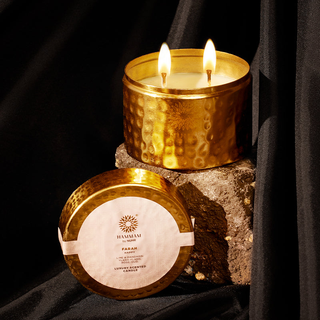
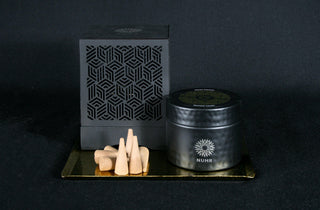
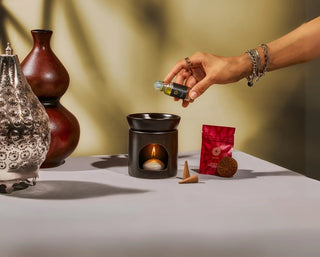
Oud is available in many home fragrance formats, from incense cones and bakhoor to reed diffusers, candles and wax melts. Each format delivers a different intensity and duration of fragrance.
Oud in Perfumery
Oud entered mainstream Western perfumery significantly in the mid-2000s. In traditional Arabic and South Asian perfumery, pure oud oil has been used for centuries as a standalone fragrance and a base for complex blends.
Oud Across Cultures
Oud burning is central to hospitality in Gulf culture. In South Asia, oud is used in Islamic ritual contexts and traditional Ayurvedic practice. In Japan, the practice of kōdō treats oud appreciation as a refined cultural art. Western engagement with oud began largely through perfumery but is now growing rapidly in UK home fragrance.
A Beginner’s Guide to Choosing Oud for Your Home
- Start with incense cones. No equipment needed, low commitment.
- Choose a softer regional profile first. Cambodian and Malay-inspired ouds are more accessible than full Hindi.
- Burn after cooking or before guests arrive. These are the two contexts where oud’s depth makes the most immediate difference.
- Layer formats gradually. Once comfortable with cones, add a reed diffuser for continuous background presence.
The NUHR Approach to Oud
NUHR Home was founded to bring the tradition of oud home scenting into modern British homes. All NUHR incense cones are alcohol-free and halal, built around oud as the foundational ingredient.


Frequently Asked Questions
Is oud the same as agarwood?
Yes. Oud and agarwood are the same material — oud is the Arabic term, agarwood the English botanical name. Both refer to the resin-saturated heartwood of infected Aquilaria or Gyrinops trees.
Why is oud so expensive?
Wild oud is rare: only a small percentage of Aquilaria trees develop the infection that produces oud, and harvesting requires felling or severely cutting the tree. Cultivated oud requires 8–15 years of growth before harvest.
Is oud halal?
Yes. Natural oud is a plant-derived resin and is fully permissible (halal). NUHR incense cones are additionally alcohol-free.
How do I start using oud at home if I’ve never tried it?
Begin with oud incense cones — they’re the most accessible format, require no equipment, and give you a clear sense of the fragrance in your own space.
Is oud incense safe around children and pets?
General precautions apply as with any combustion: keep burning incense out of reach of children, ensure ventilation, and never leave burning incense unattended. For households with birds, extra caution is advisable.
Recommended Next Reading
→ Why Oud Smells Different to Other Fragrances
→ Best Oud Scents for Beginners: Where to Start
→ Bakhoor vs Incense Cones: What’s the Difference?
→ New to Oud? Start Here